How we travel
Guided self-drive, in a small convoy.
Up to six guests, in a small convoy. A Namibian guide drives one of them and is with the group through the day. You take the wheel if you want to; no previous off-road experience is required.
The journey is run at a relaxed pace. Days are long in distance, not in hurry.
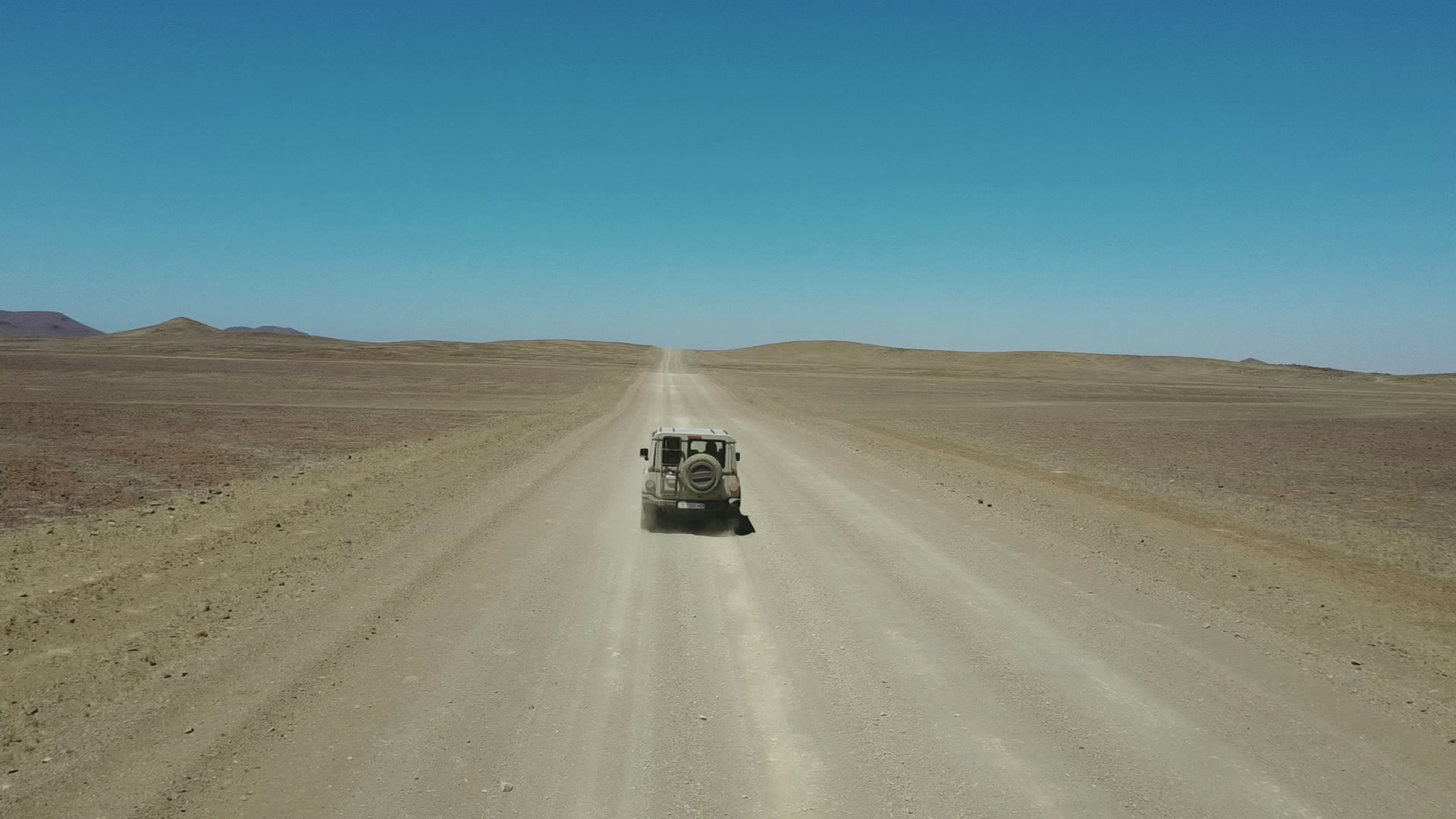
The convoy
Two or three vehicles, one guide.
- Convoy
- A small convoy. Up to four guests per vehicle, up to six guests in all.
- Guide
- A Namibian guide, born and raised here and part of the founding family, drives one of the vehicles and is with the group through the day.
- Contact
- Two-way radios link the vehicles, and a satellite phone is carried on every trip. Mobile coverage varies from area to area.
Driving
If you want to drive, you drive.
The driving is shared, the guide is close, and nobody is asked to do more than they want to.
- Taking the wheel
- You take the wheel if you want to. No previous off-road experience is required.
- Who may drive
- Drivers are at least 25 and hold a valid driving licence. A licence that is not in English needs an international driving permit or a certified English translation.
- Sharing the driving
- Drivers in a vehicle decide among themselves who drives, and can switch freely if they are all registered as drivers when the vehicle is handed over. Whether one person or several drive depends on the group.
- If you would rather not drive
- A guest who does not want to drive makes a special arrangement beforehand and typically rides with the guide.
- The guide takes over
- You stay responsible for your vehicle. In a technical stretch of difficult terrain the guide may step in, and the guide has the final say. The guide also makes sure no driver is overexerted.
- Briefing
- A short briefing before the first drive: the vehicle, gravel and off-road driving, four-wheel drive, tyre pressure, following distance, the radio and difficult terrain. With a guide alongside it stays short.
- Fuel
- DESERT TRAX handles fuel.
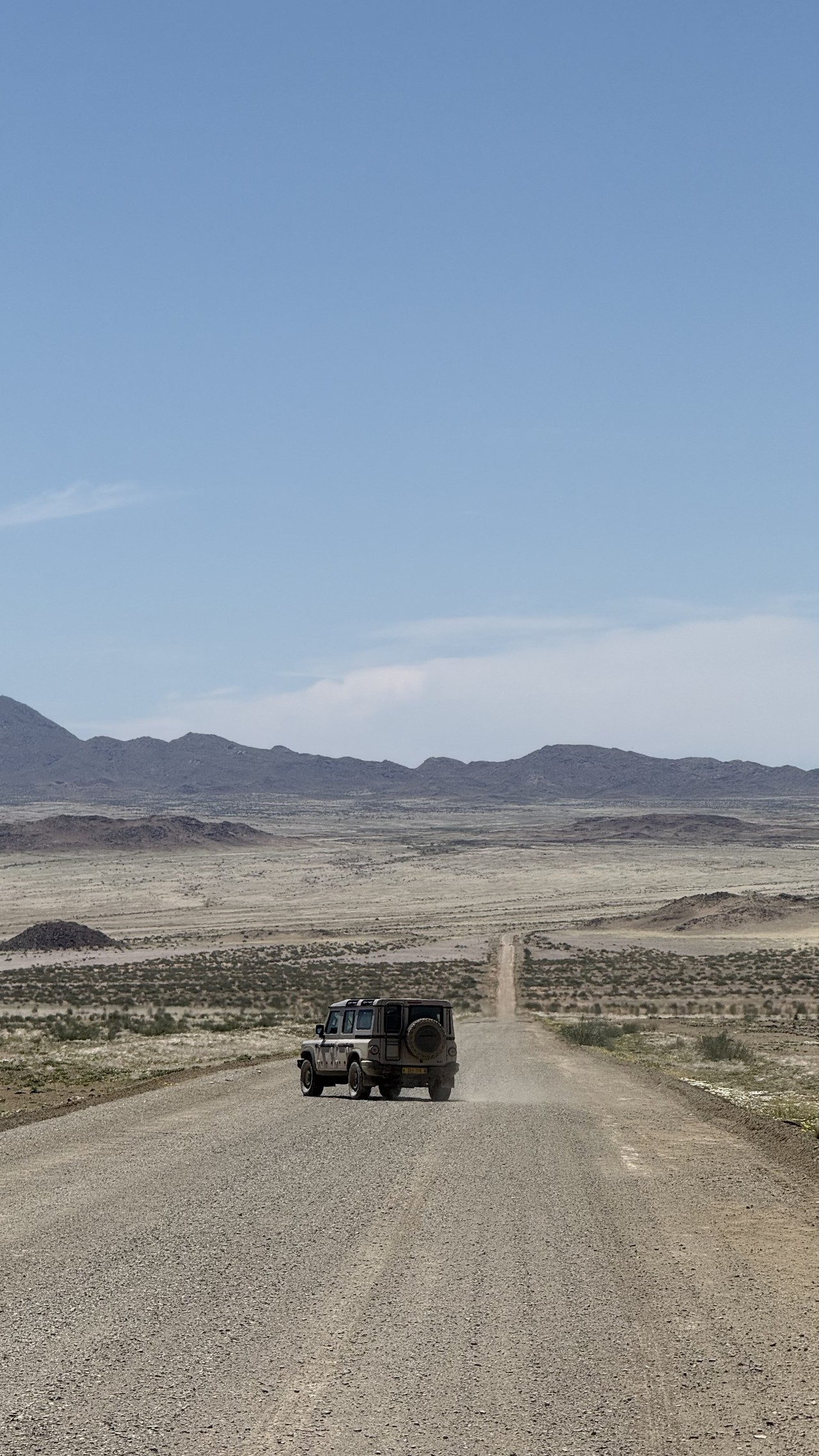
Ineos Grenadier, Namibia, November 2026
The vehicle
Built for this ground.
- Standard
- The Ineos Grenadier, or a similar vehicle, is the standard.
- Mix
- When no Grenadier is available, a Land Cruiser 70 or 300 series can take its place. Which vehicle a guest drives is not promised.
Support on the road
If something happens.
What is in place, stated plainly, before you ever need it.
- Recovery
- Recovery equipment is carried: shovel, recovery ropes, sand tracks, shackles and more, at least one complete set per convoy. The guide directs any recovery.
- Stuck
- The guide takes control, assesses the situation and starts with the least intrusive way out, stepping up the effort until the vehicle is free. Recovery is normally a mutual effort.
- Breakdown
- The Grenadier carries diagnostic equipment to clear critical fault codes where possible, so it can reach a point where it is replaced. A vehicle that cannot move is replaced where it stands, with a vehicle from our partner company. What the guests do meanwhile depends on the situation, and the guide decides.
- No reception
- A satellite phone is carried on every trip, normally one per group, and the vehicles keep in contact by radio.
- Medical
- Guests carry their own medical insurance, including emergency cover. In an emergency DESERT TRAX coordinates between the incident and the emergency responders in Namibia.
- Conditions
- The guide checks road, weather and river conditions and may change the route or the day.
Responsibilities
Handled, shared, yours.
What we take care of, what we prepare together, and what stays with you.
Handled
- Airport meeting on arrival and departure
- Route, stays and full board throughout
- Park entries, daily guided activities
- Vehicle, off-road guidance and recovery equipment
- Fuel, navigation and drinks in the vehicle
- Communication before the trip
Shared
- The first and the last night
- Recovery, normally a mutual effort
- Communication during the trip
- The airport transfer, when the group collects the vehicles at the airport
Yours
- Clearing immigration and customs
- Your visa
- Travel and medical insurance
- Your health and fitness
- The packing list: DESERT TRAX advises
Questions about the driving?
Ask them in the enquiry. David will reply personally.
The Signature Namibia Journey is where this is put to work.